Riding the wave in France: Optimism and ambitions at Boostcamp Port of Brest


Optimism was high in Brest this week as Norwegian Offshore Wind and Bretagne Ocean Power arranged Boostcamp Port of Brest. Coming on the heels of a string of positive headlines for French offshore wind, the event showcased a region riding a powerful wave of momentum ahead of the October 12 deadline for the massive AO10 tender.
The atmosphere in France is charged with anticipation. The upcoming AO10 tender represents a historic milestone, awarding up to 10 GW across fixed and floating offshore wind.
While the new tender design introduces a tactical puzzle—operating without a traditional pre-qualification phase and forcing developers to balance safe bottom-fixed options against high-reward floating opportunities—the prevailing mood is one of immense excitement. There is a tangible hope that October 12 will mark the ultimate high point for the French offshore market.

"AO10 is a big day for us in France because it marks the true acceleration of offshore wind," says Philippe Thieffry from Bretagne Ocean Power.
Developers are putting the final touches on their strategies. It’s about choosing where to position themselves to be part of building a brand-new industrial sector.
Heavyweight developers and pioneering projects
The Boostcamp Port of Brest brought together major industry players shaping this transition, including EDF Power Solutions, Qenergy, and Pennavel.
The presence of Pennavel was a strong reminder of France’s leadership: their AO5 South Brittany floating project, awarded in 2024, is on track to become the world's first commercial-scale floating offshore wind farm.

"We are convinced Brittany will be at the forefront of floating wind because we already have port facilities ready to use in Brest, and we have the landmark Pennavel project in-house," adds Thieffry.
AO10 provides the continuity we need to sustain this momentum.

Preparing the Port of Brest
The venue reflected this forward-leaning spirit. The Port of Brest is positioning itself as a central hub for floating offshore wind in Western Europe, reinforced by around €60 million in French government funding secured this summer for the INFLOW project. This funding will upgrade heavy-load quays and deep-water storage capacity to support large-scale floating operations.
The Port of Brest is in western France, positioned right at the center of the offshore wind market. In particular, floating offshore wind. We have projects in Brittany, but we are also very close to the Celtic Sea and the Irish Sea in the UK.
Those are the words of Arnaud Le Roy, Director of the INFLOW project at BrestPort.

"We are ready with infrastructure in Brest and plan to serve this market. We have 50 hectares of land available for the floating and fixed offshore wind markets, alongside a brand new 400-meter-long heavy-load quay. This allows us to host all these heavy industrial activities."
Still. A large, new port in a sheltered bay ideal for handeling offshore wind will not be able to handle the expected offshore wind build-out in the area on its own. That's why Le Roy emphasises collaboration with other ports.
"We actively look for synergies between ports. Nationally, we collaborate with other French ports, and internationally with UK and Irish ports. We have a partnership with ABP (Associated British Ports) and have built an alliance with ABP and Shannon Foynes Port in Ireland to collaborate on floating wind. This collaboration involves sharing technical requirements and identifying operational synergies."
The market is too large for any single port to handle alone.
Bridging supply chains: From mooring lines to massive barges
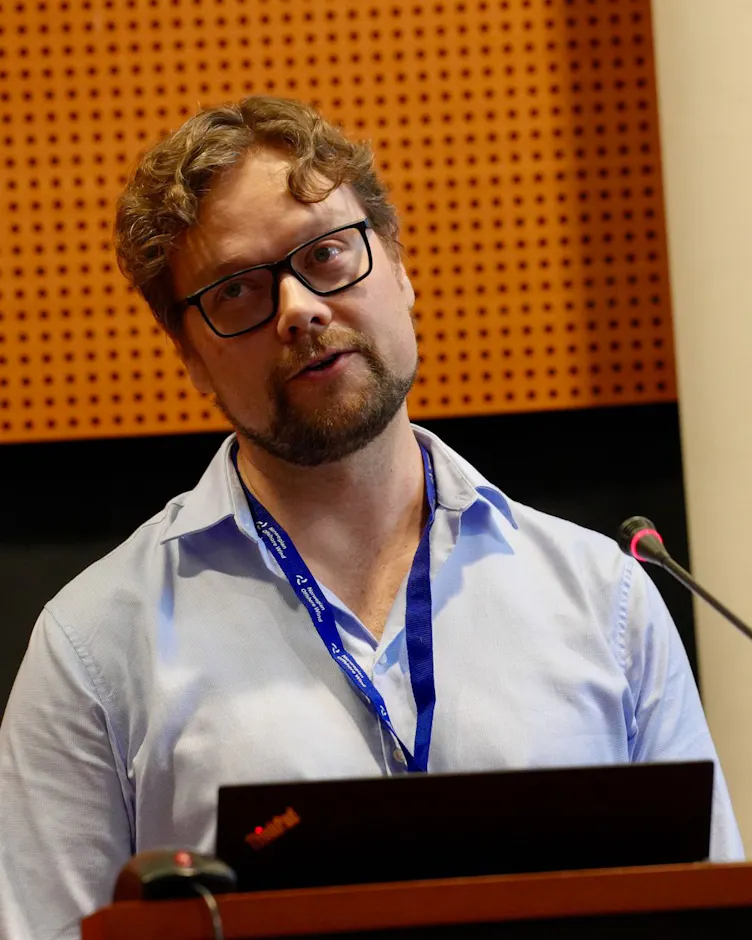
To turn these ambitions into reality, cross-border industrial partnerships are key. Local Breton suppliers presented their regional expertise, while Norwegian companies demonstrated specialized offshore capabilities, offering everything from advanced rope solutions for heavy lifting and mooring, to deployment strategies using the world’s largest barges.
From the developer side, Laurent Smagghe (Relations with Industry Offshore Wind at EDF Power Solutions) outlined EDF's global floating portfolio, including Utsira Nord in Norway. Smagghe emphasized that while floating wind faces supply chain and workforce bottlenecks, direct B2B platforms like this Boostcamp are vital for building alliances across their 2,000+ supplier network.
Adding further technical depth to the day, Ocergy delivered a highly instructive "lessons learned" session from the Culzean project, a floating pilot project in the UK sector that stands out as a prime example of the offshore wind supply chain operating at its absolute best.
The Culzean project will also be presented at Havvindkonferansen in Oslo the 12th of October.
With strong momentum, clear technology synergies, and collaborative goodwill on both sides of the North Sea and English Channel, the stage is set for a milestone autumn in French floating wind.

Join our newsletter
Get weekly updates from the industry and other Norwegian Offshore Wind content
Sign up here

